Executive insight
AI readiness assessment: what executives should check before funding more AI work
Quick answer: An AI readiness assessment answers one question: can the organisation turn a promising AI use case into a controlled operating capability? It tests whether the business problem, value case, data, risk, operating model, adoption and measurement are each owned and strong enough for the next investment decision. If any area has no named owner, the project needs diagnosis before a larger build commitment.
An AI readiness assessment should answer one commercial question: can the organisation turn a promising AI use case into a controlled operating capability? A useful assessment tests whether the use case, data, governance, ownership, workflow, adoption plan and value case are strong enough for the next investment decision. Some teams describe this focused review as an AI readiness check.
Who is this guide for?
This guide is for CEOs, COOs, CIOs, CTOs, transformation leaders, operating partners and business-unit leaders who already have AI interest or pilots under way. It is most useful when the board wants clearer evidence before approving wider delivery.
What does the readiness test cover?
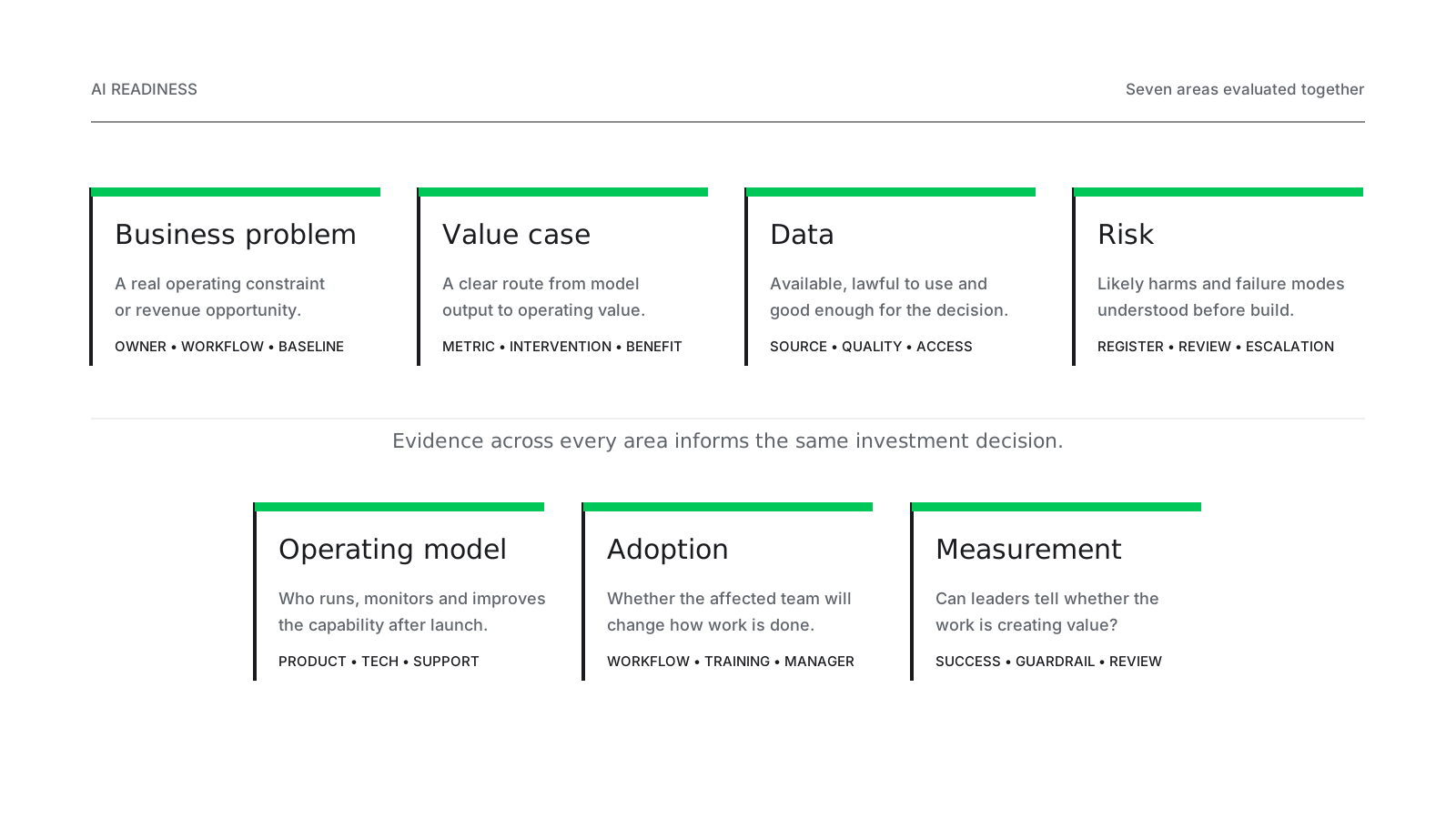
Readiness has seven parts: business problem, value case, data, risk, operating model, adoption and measurement. Each area needs a named owner and clear evidence before the investment decision is made. If one of these areas has no owner, the project is not ready for scaled implementation. The next step should be diagnosis or controlled discovery before a larger build commitment. Where the work is centred on reporting, analytics and data foundations, the same method can be framed as a business intelligence readiness assessment.
The business problem must be tied to a real operating constraint or revenue opportunity with a named owner, affected workflow, current baseline and target decision. The value case must explain the route from model output to financial or operational value. Data must be available, lawful to use and good enough for the decision. Risk requires a register, human review points and an escalation path. The operating model identifies who will run, monitor and improve the capability after launch. Adoption asks whether the affected team will change how it works. Measurement establishes how leaders will tell whether the AI work is creating value.
What should executives avoid when assessing AI readiness?
Avoid readiness work that produces a generic maturity score without an investment decision. A board needs a clear view of which use cases are ready, which ones need better data or governance and which ones should stop. Avoid a technology-only review: the model is one part of the system. The workflow, risk controls, people, incentives and operating owner decide whether the investment survives contact with daily work.
How does AI readiness connect to recognised governance frameworks?
The NIST AI Risk Management Framework describes AI risk management through four core functions: Govern, Map, Measure and Manage. ISO/IEC 42001:2023 sets requirements for an AI management system covering repeatable controls for developing, providing or using AI systems. For UK organisations, the government's AI regulation white paper sets a principles-based approach built around safety, transparency, fairness, accountability, contestability and redress.
What does a practical readiness output include?
A practical readiness output includes: a ranked use-case shortlist; a stop, fix, test or scale recommendation for each candidate; a data and workflow risk view; a governance and ownership map; a first delivery roadmap with decision gates; and a measurement plan for value and risk. The output should be concise enough for an executive meeting and specific enough for delivery teams to act on.
When is Black & Rhine a fit?
Black & Rhine fits organisations that need senior help to translate AI ambition into controlled delivery decisions. A focused readiness discussion starts with what is already in motion, where the bottleneck sits and which decision the leadership team needs to make next.
Questions leaders ask about AI readiness
How long should an AI readiness assessment take?
The right duration depends on the number of business units, use cases, systems and stakeholders. Treat any fixed timeline as provisional until the scope is clear.
Is AI readiness the same as AI strategy?
No. Readiness tests whether a specific organisation can act on AI opportunities now. Strategy decides where AI should matter, which capabilities to build and how to sequence investment.
Should readiness happen before every AI pilot?
Small experiments may need a lighter review. Readiness becomes more important when a pilot touches sensitive data, customer decisions, regulated workflows, material cost or production operations.